10 November 2026 · 6 min read · Laura Greaves
How to prep a manuscript for audiobook narration
Every narrator learns it eventually: the hours you spend recording depend on the hours you spend before it. Really excellent audiobook prep means fewer pickups, fewer re-records and a performance that is consistent from start to finish.
We love manuscript prep, and have created a manual software which helps you master it once and for all, whether it's your first title or your fiftieth.
01Read the whole book before you record
It's tempting to start recording after the first few chapters, but a twist in chapter twenty can change how a character should have sounded from the start. Read the full book once for story, and note anything that affects performance: accents, ages, plot twists, characters who appear only briefly and return later.
02Build a character list as you go
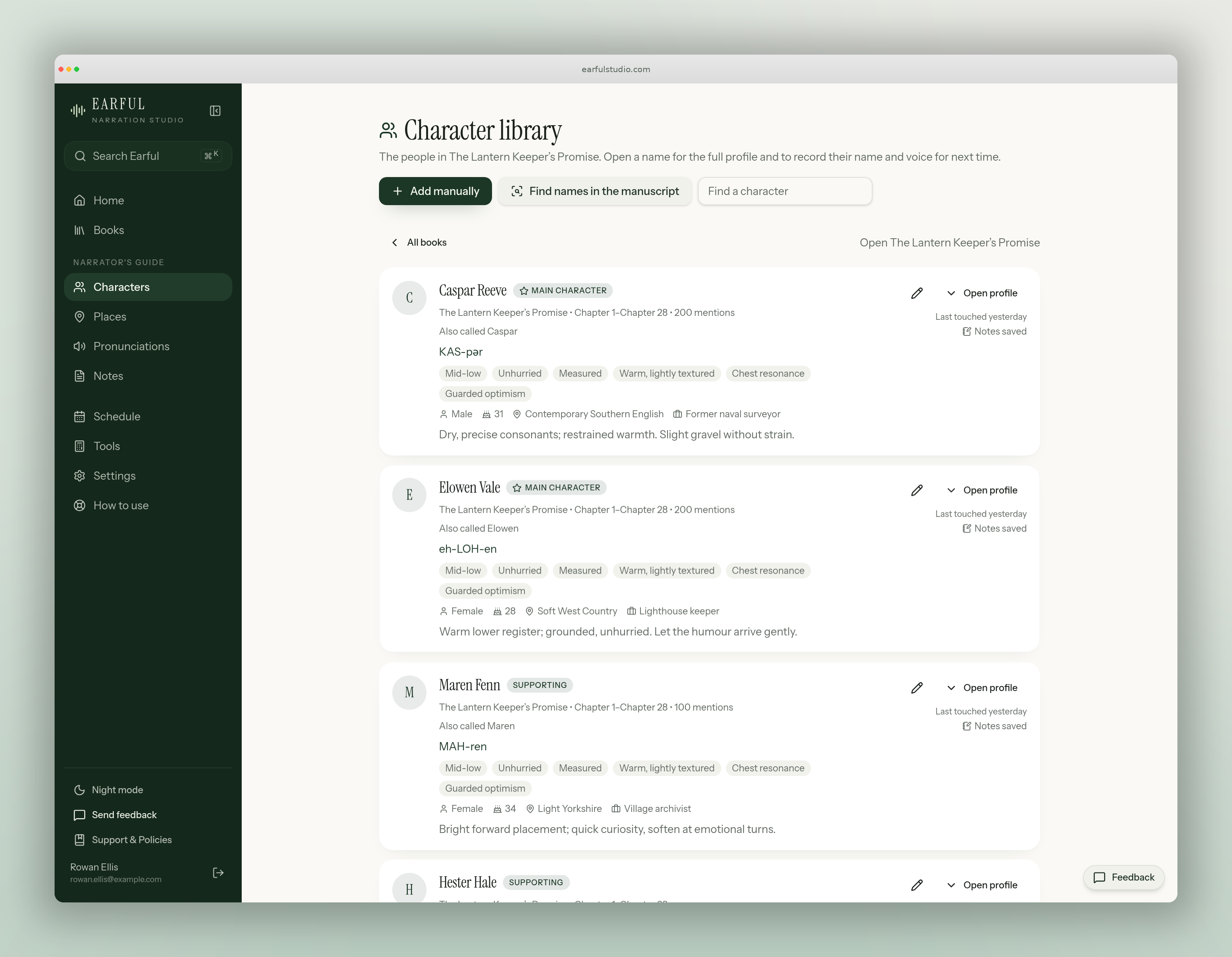
For each speaking character, write down what the text tells you and what you decide. A short entry is enough:
- Name, and any nicknames or titles other characters use
- Age, background and where they're from
- Voice notes: pitch, pace, texture, accent
- The chapter they first speak in
- A short voice clip once you've settled on the sound
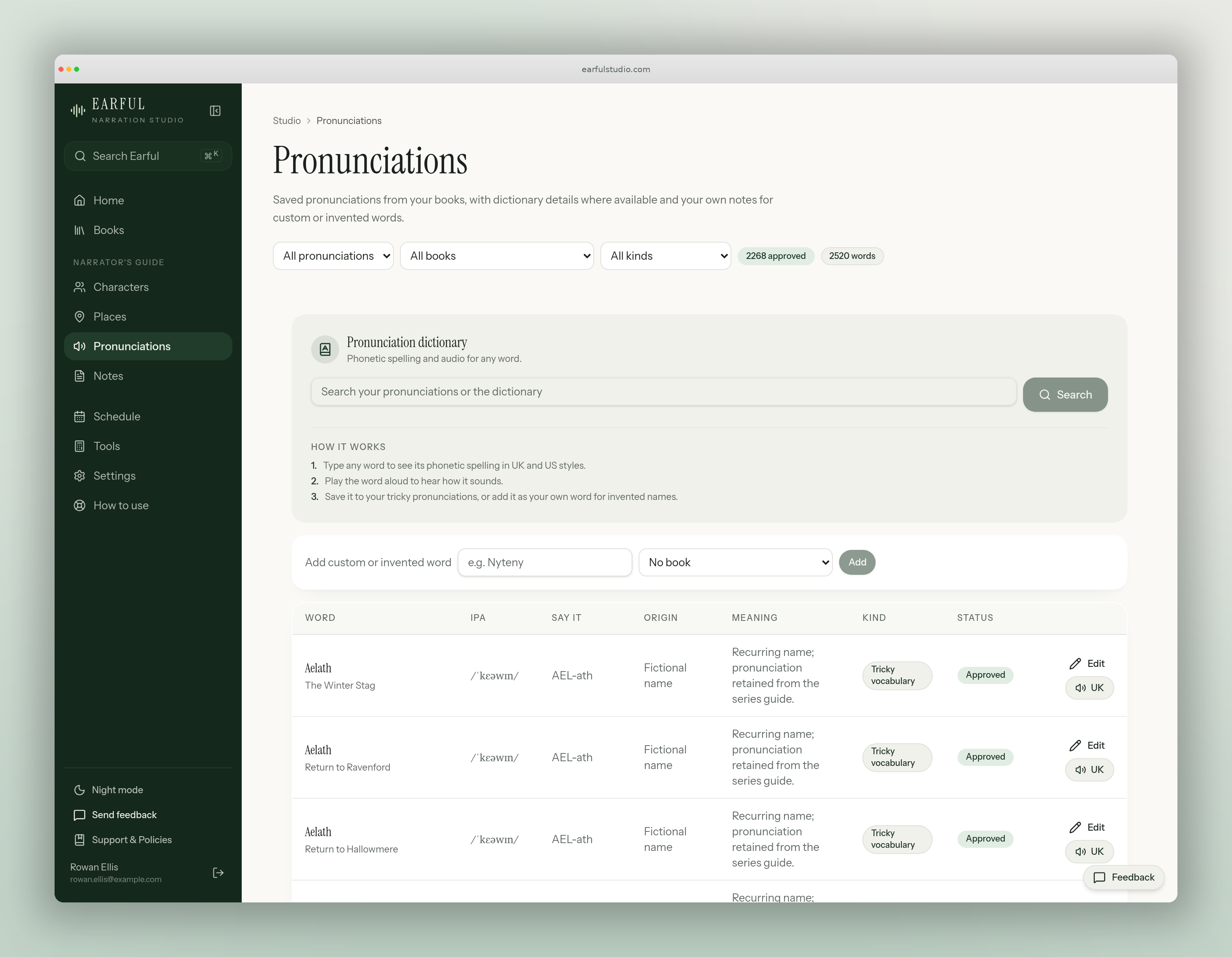
03Check every pronunciation up front
Invented names, places, foreign words and technical terms are the most common cause of revisions, especially in the fantasy genre. Gather them into one pronunciation list before you record. Ask the author or publisher about anything invented, check reliable references for real words, and record a reference clip of your chosen pronunciation so you say it the same way in chapter thirty as in chapter three.
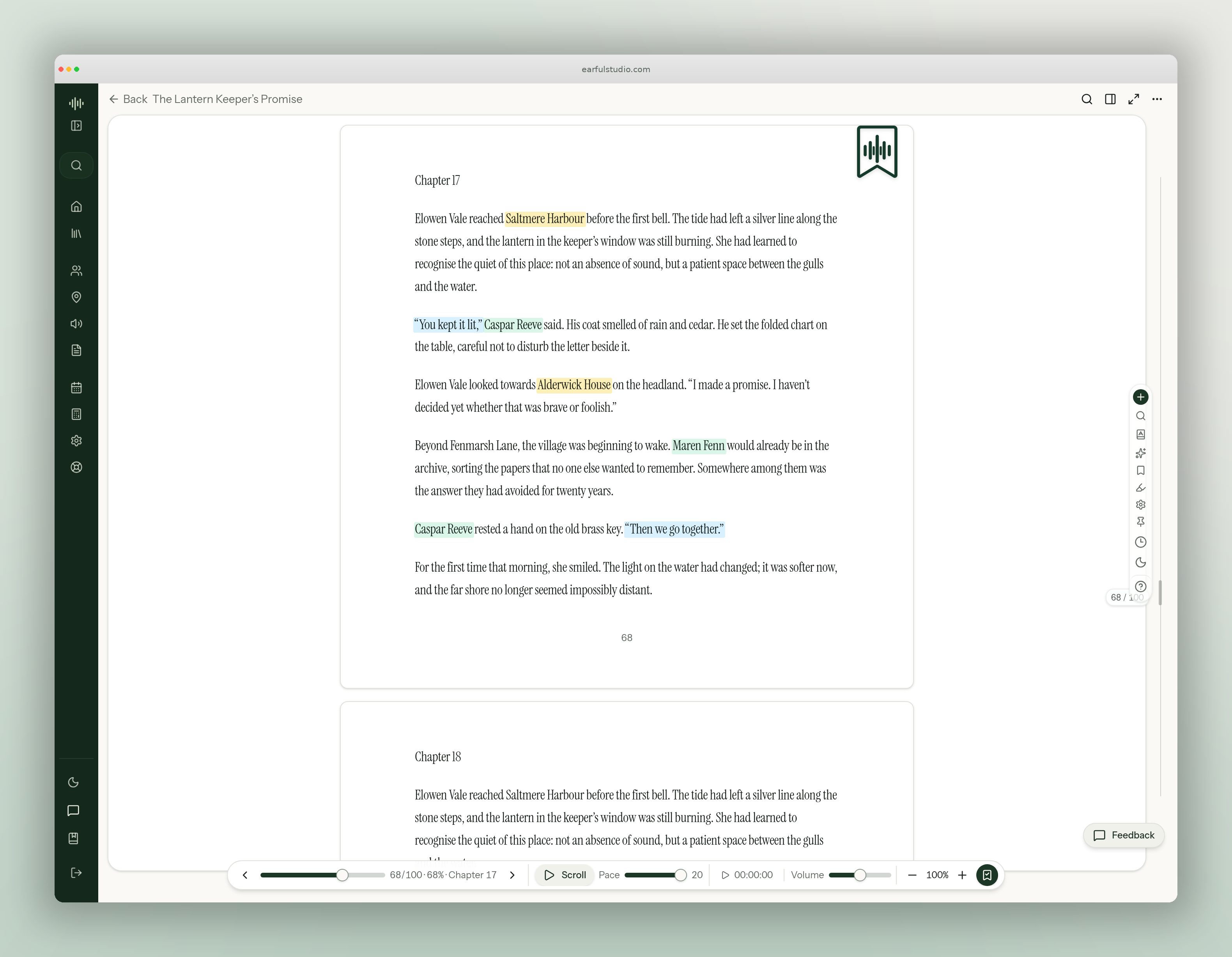
04Mark the manuscript
Highlight dialogue for characters who are easy to confuse, flag long sentences that need a planned breath, and note tricky passages. Colour-coding characters helps many narrators switch voices quickly without losing their place (and we have some really cute colours to highlight with...)
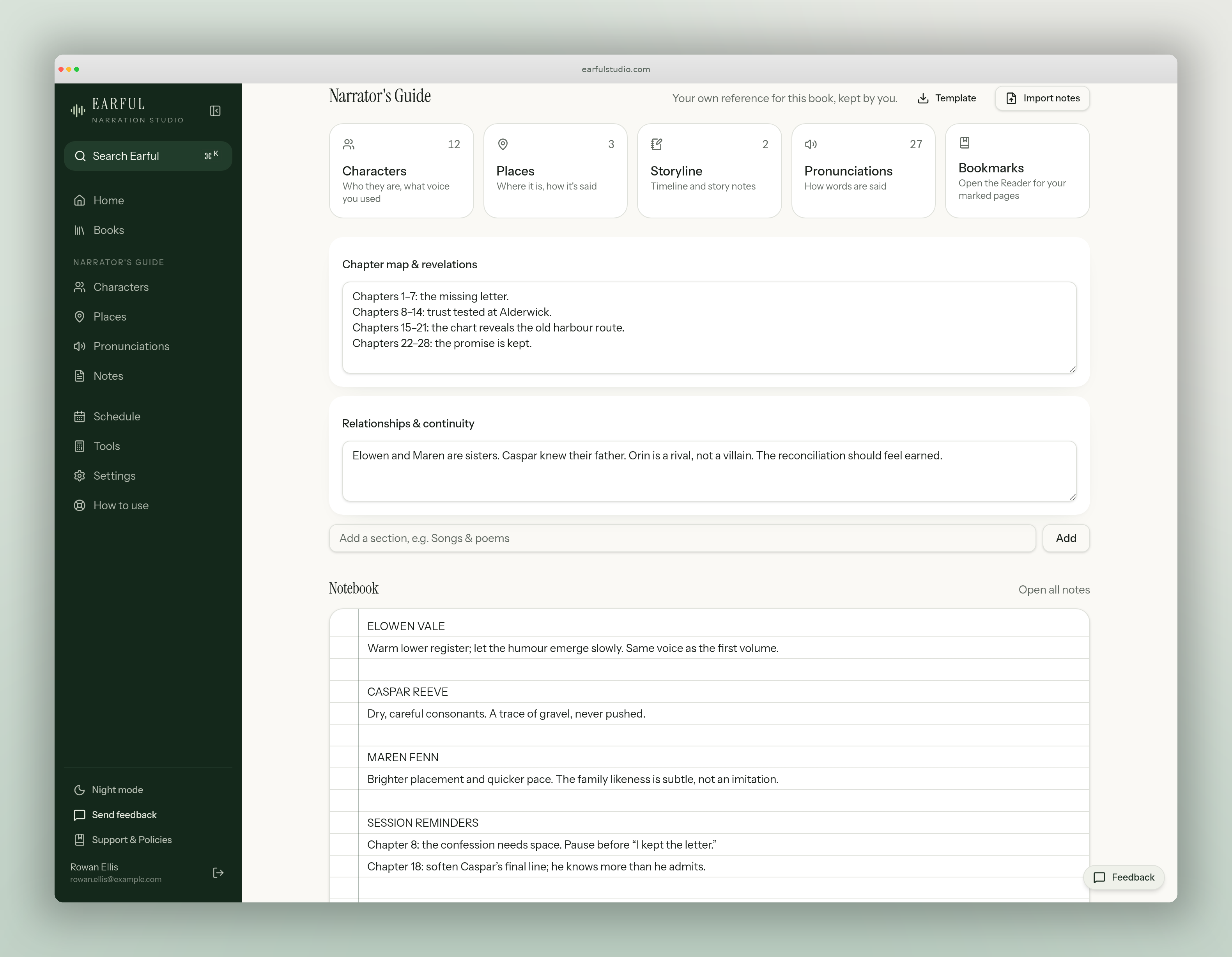
05Keep a running storyline summary
A few lines per chapter saves you when you return after a break, record out of order, or narrate the next book in a series. Note relationships, reveals and the emotional state of key characters.
06Plan your sessions
Estimate the finished length from the word count (many narrators use around 9,300 words per finished hour as a starting point), then work back from your deadline to a realistic daily target. We keep your place in the manuscript reader, so that when one recording session finishes, you can easily pick back up next session from where you left off!
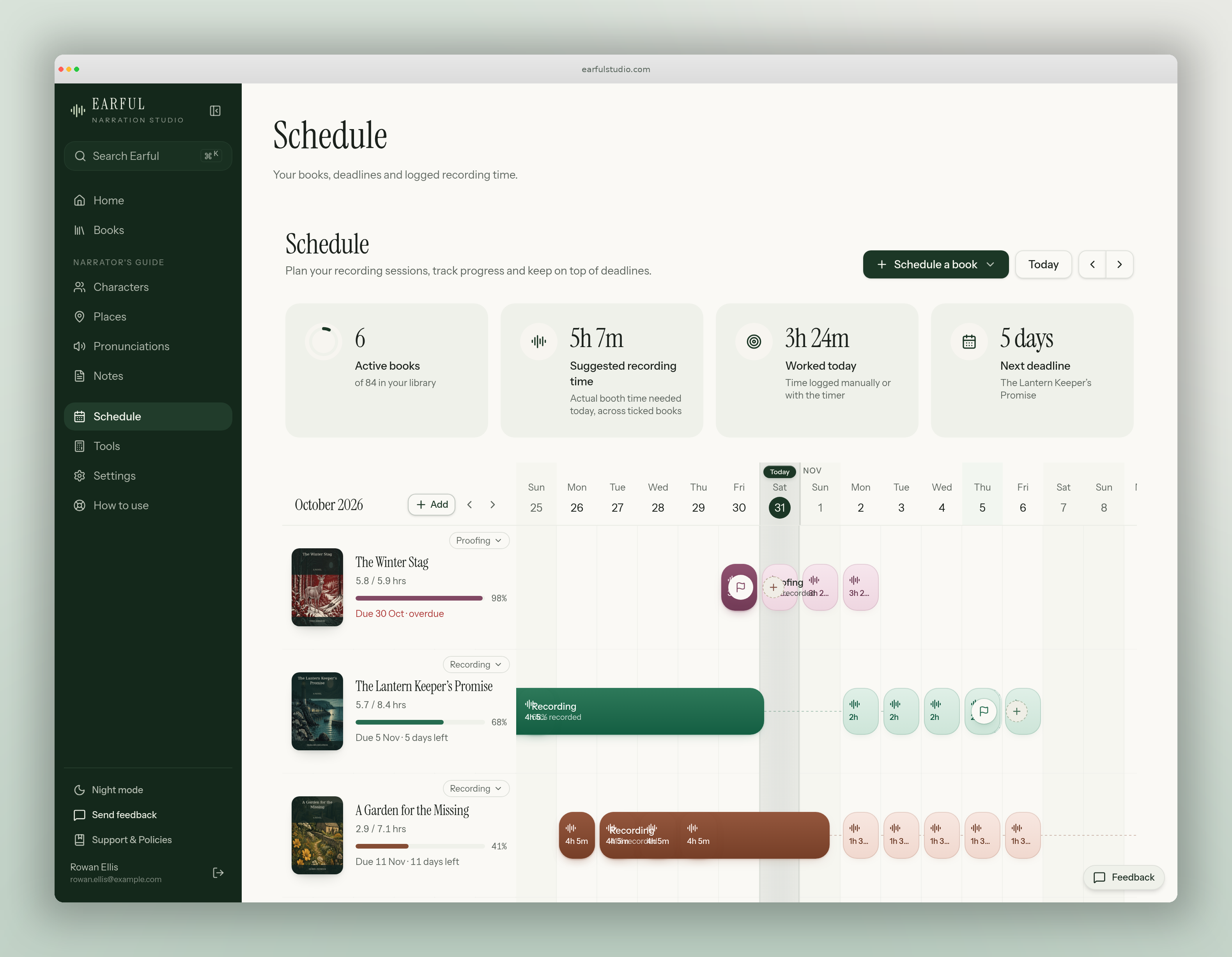
07Keeping it all in one place
Most narrators juggle a PDF, a spreadsheet of characters, a notes app and a folder of voice memos. Earful was built by a professional narrator (me!) to bring that together: a distraction-free Reader for your manuscript with highlights, notes and bookmarks, and a Narrator's Guide for characters, places, storyline and pronunciations — including voice clips — that stays with you for the rest of the series.
Whatever tools you use, the principle is the same: decide once, write it down, and get back to recording.